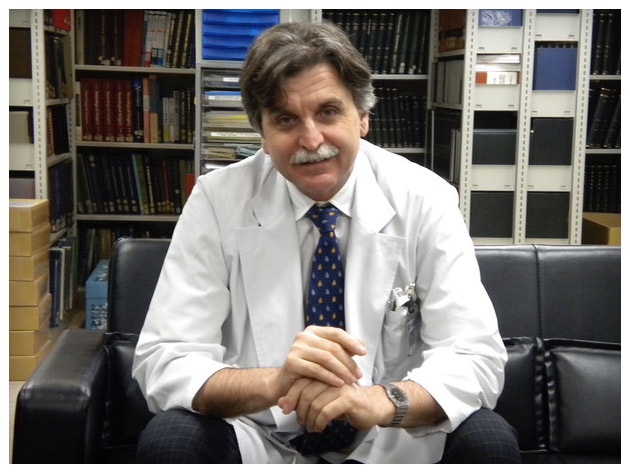
Senior Lecturer at Jikei University School of Medicine, Tokyo, Japan.
On Learning Surgical Technique through the Last Few Decades and Beyond
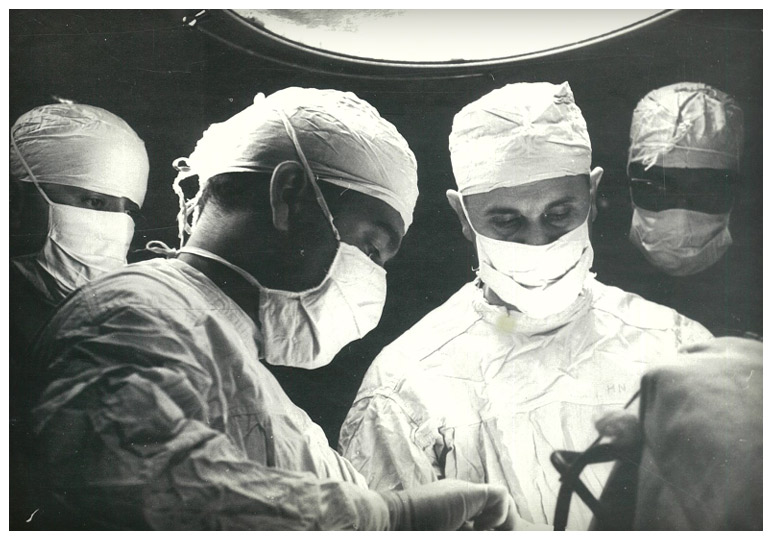
Since pre-historical times, surgeons, or whatever their role was named, performed interventions on the human body they learned from their master-teachers. There were always certain established standards that had to be conveyed from master to apprentice. With every new stage of understanding human morphology, the interventions were better defined and the effects on the structure, eventually also function, were gradually improved. Historic scientific documents have conveyed this reality to us of the past. That also brings the important question of what role this knowledge of the past plays in the development of knowledge at present.
Certainly, this role was essential for progress and we can find that in the numerous documents preserved in great libraries in leading academic institutions around the world. There are preserved also the early anatomical and surgical drawings reflecting ancient concepts of surgical management. Generations in sequence learned from them and through the centuries reached the present status.
In addition to being a source of information for learning and teaching, every document reflected the personal understanding of the anatomist or surgeon - artist and not only the status of certain areas of knowledge, or medical practice. In that, drawings are personal teaching messages.
1. About the Atlas Origins
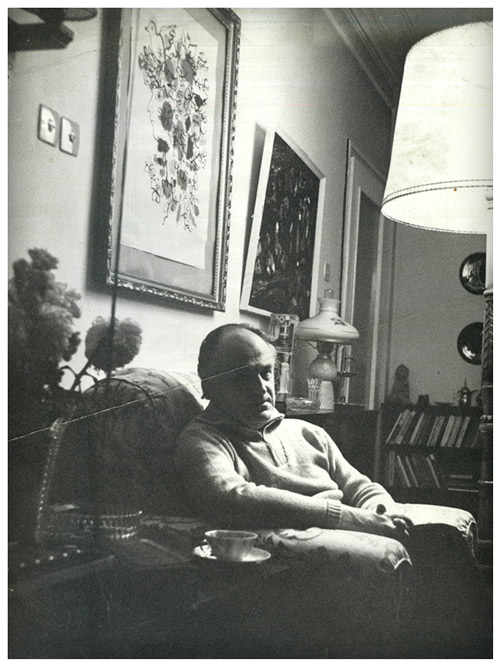
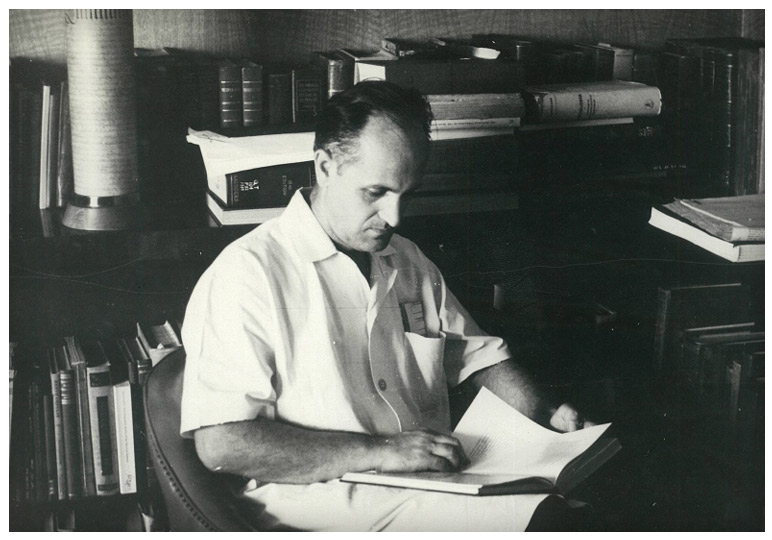
In Bulgaria there has been also a widely accepted tradition, as everywhere, for the junior neurosurgeons to learn with the seniors, and that was more in those post-World War II times when freedom of movement to learn abroad was limited in a divided world. The senior author of the atlas, Lubomir Karagiozov, has build-up his mastery exclusively in Bulgaria, with very few occasions of learning abroad.
After a dedicated work at the Department of Anatomy for years, he moved to the Neurosurgical Department of the Medical Faculty of the University of Sofia under Prof. Filipov. For the following years, he rapidly acquired the technical standards of the traditional German school from his mentor and continued developing them on the basis of his sound anatomical knowledge with implementation of new ideas and modifications on the recently published.
While in the department of Anatomy, and later as a neurosurgeon, he occasionally sketched on tracing paper with black Indian ink his surgical observations. That additional skill came into action in the early sixties, when he was sent on a mission to support neurosurgery in Cuba. Having to train on the basics of neurosurgical technique a big number of residents, an illustrated manual became obviously of great need. In fact, this became the first version of the atlas prepared by him in Spanish language – “Técnica Neurochirúrgica”.
This third version, without changes in the images and the scientific content preserved as of those times, was proofread as a scanned text and then edited for best understanding is offered here.
2. The Value of Hand-drawn illustrations by a Surgeon
Surgeon`s drawings and sketches have continued to be drawn at present and are highly appreciated for the unique message they carry. The Japanese Neurosurgical association has a special group of neurosurgeons where each of the members produces very interesting and individualized drawings that they present at their own illustrators annual meeting, as well as at the association annual congress. Requiring a special talent, each of the neurosurgeon-artists has its own style of expressing not only observations, but also intentions and actions focusing on the logic requiring them. All this exists in conjunction with video sessions and hand-on training courses, all 3 forms complementing each-other, and by that jointly contributing to progress of neurosurgery. Therefore, beginning neurosurgeons are encouraged to draw on their observations.
Although difficult to define as a rule, surgeons draw conforming to background of representative anatomy (seen under the microscope, on image or video), adding the effect of the experienced and knowledgeable observation. In fact, that makes the difference between photo image and a surgeon`s drawing. Often these sketches of a surgical procedure reflect the level of importance in the elements of the procedure, the priority of problems to be solved, and the analytical effort of the author for the solution. As a result, the drawing may represent not identically the observed structure, but also summarize important features experienced in multiple cases in the past. All this reflects the professional individuality of the author and the message that is intended to be conveyed to the observer.
3. What We can Learn from the Atlas Now
The progress of knowledge requires constant update on the most recent evidence coming upfront. The newest media expanding through the internet are much faster than publishing on paper. Our interaction with the sources of professional knowledge update is dictated by demand of efficiency, personal time limitations and level of evidence. The formats of presentation have become closer and closer to reality of practice.
We observe now the surgeries live and on video recordings, where comments guide the observer. In this way exist multiple instructive videos, practically in all areas of neurosurgery. Therefore, what can we learn from an “historical” document?
We will have to learn not much about the surgical technique itself; often it is already well established or modified, but to understand why certain techniques were established and then modified, so we will consider the techniques of the present in the same way with a need of improvement. That is an essential component of the innovative mode of thinking that every surgeon needs. On the other hand, the textbook type of source is capable to convey a more complex understanding of the main, common concepts of the author, applicable to broader areas in different pathologies and techniques, sub-specialties or the whole field of neurosurgery. In such documents, we can compare the present with the immediate past and identify the reason why the techniques evolved.
We can understand the mental process of seeking improvement – from identifying the problem, generating potential solutions, optimizing the choice, its initial implementation before the recommendation for use with finally defined indications. Finally, we can look at the mentors style of work in neurosurgery – by the existence in a status of permanent re-appraisal of the performed, identifying what can be improved, and finally finding it. Not least, the readers will become also aware of the existence of tradition in our country. Such continuity supported all of us in the past, through present into the future.
4. On Continuity
Today we are building our next paradigm of neurosurgical professional performance, that of the foreseeable future. It depends on our creativity how it will look like. Deciding on what should remain and what should be changed, particularly how, is the process we are participating in. Such decisions were taken by many professional generations before us and the specifics of continuity in creativity and high standards is what we can call tradition. Every new generation having the support of tradition will achieve the highest achievements. History has already proved that.
With respect and admiration to all generations of colleagues who dedicated their life to the science and art of neurosurgery.