SPINAL EXTRADURAL ABSCESS
Abscesses of the spinal extradural space can result from septic emboli to the extradural fatty tissue. Alternatively it may derive from a spread of infection from a paravertebral focus site via an intervertebral foramen, or by direct extension from spinal osteomyelitis. Rarely they can be caused by penetrating injuries or as a complication of surgery or lumbar puncture.
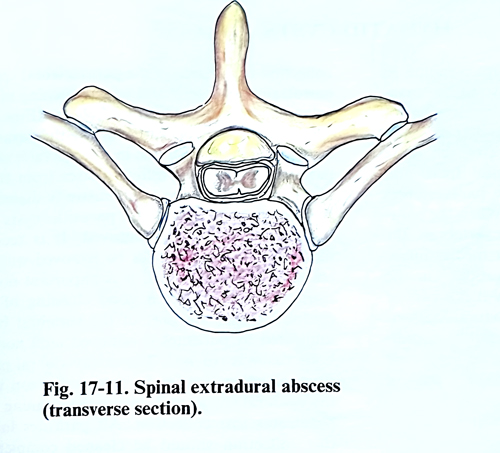
Spinal epidural abscesses are usually located dorsally to the dural sac and are situated mainly in the thoracic part of the spine (Fig. 17-11).
Staphylococcus aureus is the most common causative organism for spinal epidural abscesses, although streptococcus and/or pseudomonas may be also responsible. Fungus granulomas such as actinomycosis and blastomycosis are occasionally encountered.
Initial symptoms are local, with root pain as well as fever and other general manifestations of infection. Motor and sensory deficits occurring distal to spinal cord compression and sphincter troubles may also develop. In some patients deterioration occurs quickly, within a matter of hours or a few days. In others the disease has a prolonged course over a period of days and weeks.
Patients suspected of having a spinal extra-dural abscess need a careful clinical and neurological evaluation. Spinal X-rays are indicated. but are often normal, unless paravertebral abscesses or osteomyelitis are demonstrated. Myelography should be done promptly; it can demonstrate the upper and lower limits of the abscess. CT and MRI give additional diagnostic information about the location and the spread of the abscess.
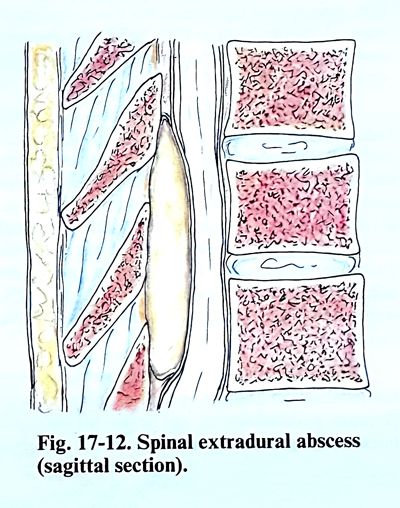
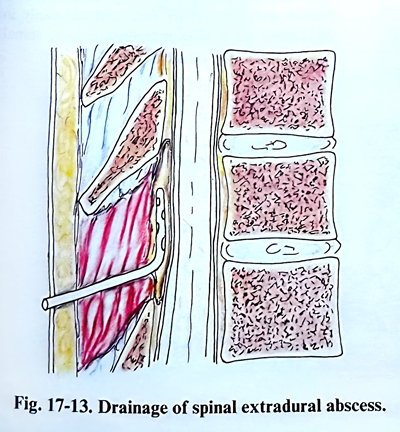
Prompt decompressive laminectomy and removal of the abscess should be carried out. In acute abscesses, frankly purulent material will be evacuated (Figs. 17-12; 17-13). In the chronic forms only granulation tissue can be found, which might be mistaken for a malignant neoplasm (metastasis). Complete removal is usually possible. Bacteriological culture and smears should be obtained. In cases of acute purulence, local antibiotics, and external drainage of the wound should be applied for several days.
If an extradural abscess is suspected pre-operatively, antibiotics should be given before surgery. A choice is made on the basis of the antecedent infections. Antibiotic therapy should be maintained for at least 4 - 6 weeks after surgery.