EPIDURAL ABSCESS
The epidural abscess is a result of direct penetration of the infection in the epidural space from sinusitis, inflammation of the middle ear and osteomyelitis of the cranial bones. The clinical manifestations begin with headache, vomiting and generalised signs and symptoms of bacterial infection. The growth of the abscess provokes increased intracranial pressure and deterioration of the level of consciousness. In some patients, penetration of the infection into the subdural space leads to a sudden deterioration because of additional meningitis, brain abscess formation or thrombosis of the dural sinuses. CT and MRI studies are essential to detect the location and the size of the epidural abscess.
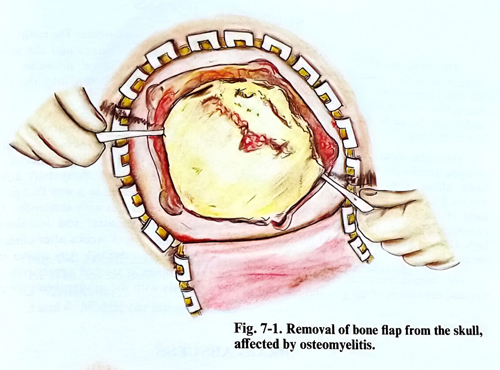
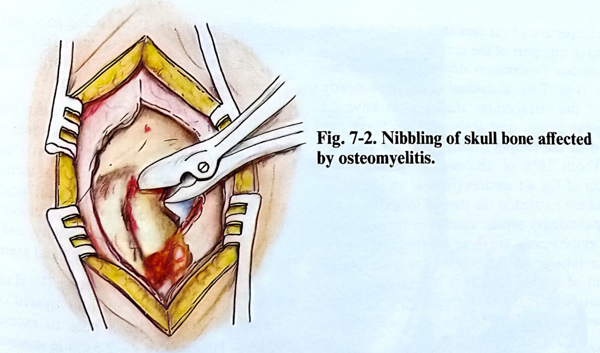
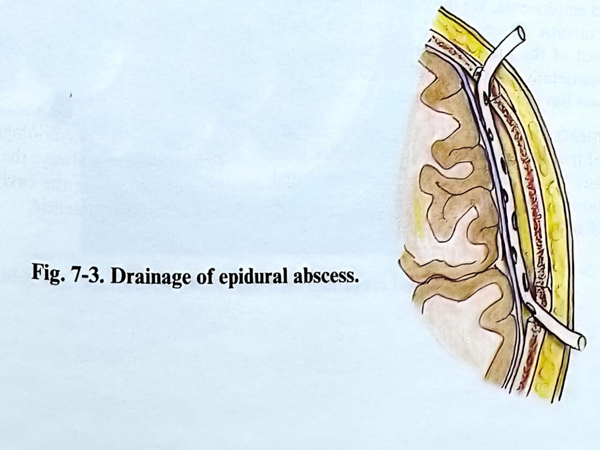
The surgical treatment consists of craniotomy and removal of the pus with the produced granulation tissue. The cavity is washed with saline and antibiotics and the wound is closed with placing an epidural drainage (Fig. 7-3). Antibiotic treatment continues for several weeks after complete healing of the wound, and the wound must be treated with local instillation of antibiotics occasionally.