CERVICAL DISC OPERATIONS
Disc prolapses or osteophytes developing in the cervical spine and compressing the content of the spinal canal have three typical localizations. The median prolapses cause a compression of the spinal cord, the anterolaterally located exert a compression on one side of the spinal cord, and the lateral prolapses or osteophytes provoke only root compressions.
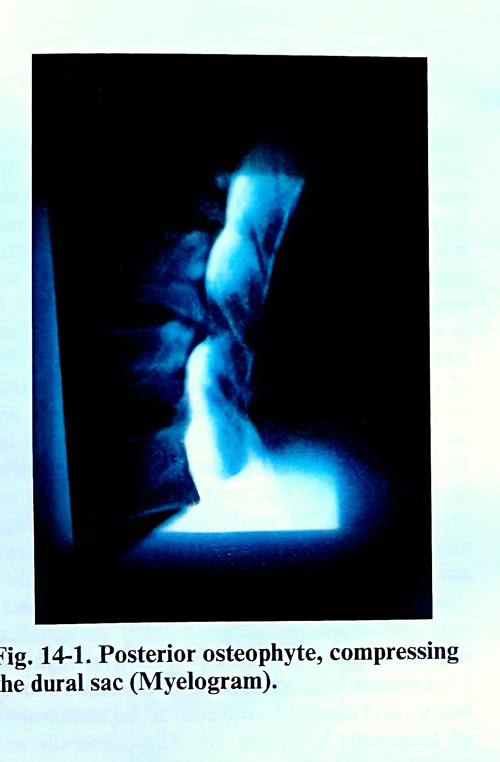
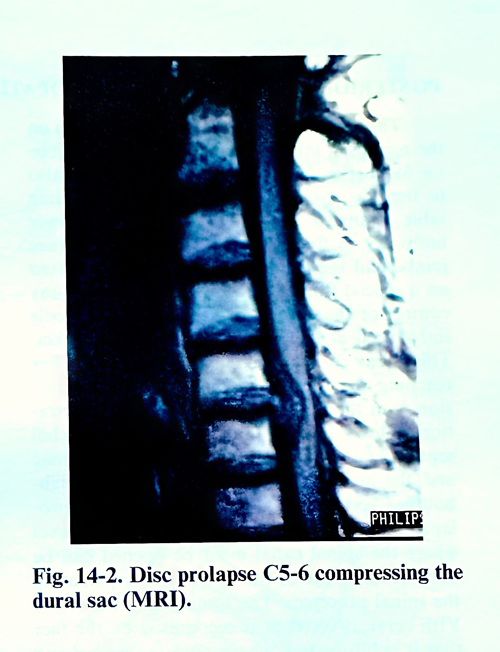
The disc prolapses and osteophytes are located at different levels, most frequently at C 4-5, C 5-6, and C 6-7. Laterally developed osteophytes are able to compromise the vertebral arteries and in some rare cases large anterior osteophytes induce dysphagia (Fig. 14-1; 14-2).In cases of lateral compression causing painful syndromes or radiculopathy, surgery is indicated after failure of conservative treatment.
It is difficult to determine the duration of the conservative treatment, but 3 - 4 weeks are usually sufficient for improvement to be demonstrated. Surgical treatment may be indicated earlier when the pain is intolerable and/or neurological deficit deteriorates quickly. The profession of the patient is the most important consideration, as even mild weakness may affect professional activities.
Spondylotic myelopathy requires surgical decompression when it is progressive and does not respond to conservative treatment. Advanced age is not a contraindication for surgical treatment if the patient's condition permits general anaesthesia for 2 - 3 hours.
The surgical approaches used for the different types of degenerative cervical disc lesions can be posterior and anterior. There are no absolutely strict rules on the indications for these approaches. Large series operated by one approach, either anterior or posterior, when compared, show very little difference in the postoperative success. In many occasions the application of one or other approach depends upon the preference and the experience of the surgeon. Irrespective of this, there are many factors which influence the choice of approach.
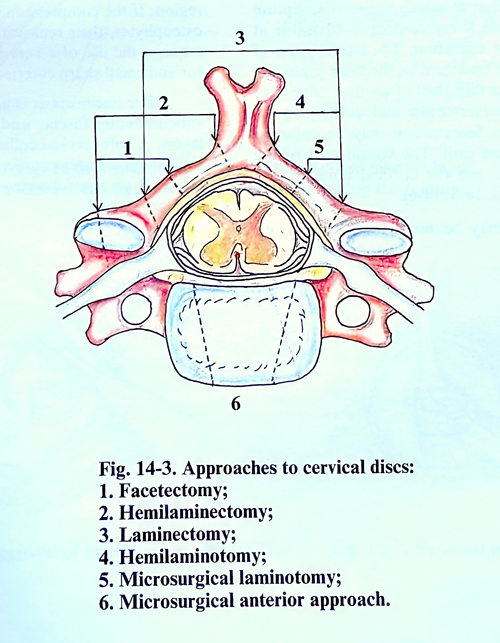
Laminectomy remains the preferred option for cases of canal stenosis. It is also appropriate where the myelopathy is mainly due to posterior compression caused by bulging and thickness of the flavum ligaments.
Hemilaminectomy and posterior foraminotomy are particularly appropriate in lateral soft disc prolapses, when there is radiculopathy. They are also indicated when the intervertebral foramen is narrowed by facetal osteophytes or intraforaminal disc prolapses.
The anterior transdiscal or transcorporal approach, combined with fusion or without it, is indicated where central or anterolateral compression of nerve roots or the spinal cord exists due to disc prolapse or osteophytes (Fig. 14-3).
Multiple level disease is very common in cervical spondylosis, causing radiculopathy or myelopathy. In some cases a decision has to be made about the number of levels which require surgical intervention. In most cases it is possible to decide radiologically which single level is most responsible for the disease by comparing the clinical manifestations with the most severely affected levels. In cases with myelopathy and, less frequently in radiculopathy, the radiologically involved level is often between one and three segments cranial to that which is estrablished from the clinical presentation.
In some cases the extent of the affection may be so widespread that a single responsible level cannot be identified with any degree of certainty. This is particularly valid in cases with canal stenosis. In such a situation all abnormal levels require decompression and therefore demand laminectomy.